


by Forest Hills Gardens Foundation
Jan. 13, 1917 – May 5, 1917 (Volume 2: Issue No. 9 – No. 17)
Following the United States’ entry into World War I in April, life in The Gardens was increasingly shaped by wartime mobilization. From organized war relief efforts and civic coordination to ongoing school advocacy and cultural life, the winter and early spring of 1917 reflect a community adapting to new national demands while preserving its strong local identity.
Wartime Mobilization and Service
War relief efforts quickly became central to life in The Gardens. Local committees coordinated to support Red Cross initiatives, with local women producing surgical dressings and supplies in mass volume.
The formation of the National League for Women’s Service (NLWS) brought about organized training for war readiness, and the local branch in Forest Hills held classes in hospital nursing, raising food supplies, and social welfare.
Established in early 1917, The Forest Hills Rifle Club focused on military preparedness and training at the local level. Members enlisted, participated in drill sessions and marksmanship practice, and organized recruitment efforts to build a large skilled force. The group was over 125 strong by spring of 1917 and hoped to reach 200 by May.
Youth groups in Forest Hills Gardens such as The Boy Scouts and Girl Scouts joined forces to assist with relief production and fundraising. They held Army Hut Night in March 1917 at Church-in-the-Gardens and gathered and displayed 5,000 small pillows to be used in field hospitals and ambulances. Funds raised were used to support four French orphans of the war.
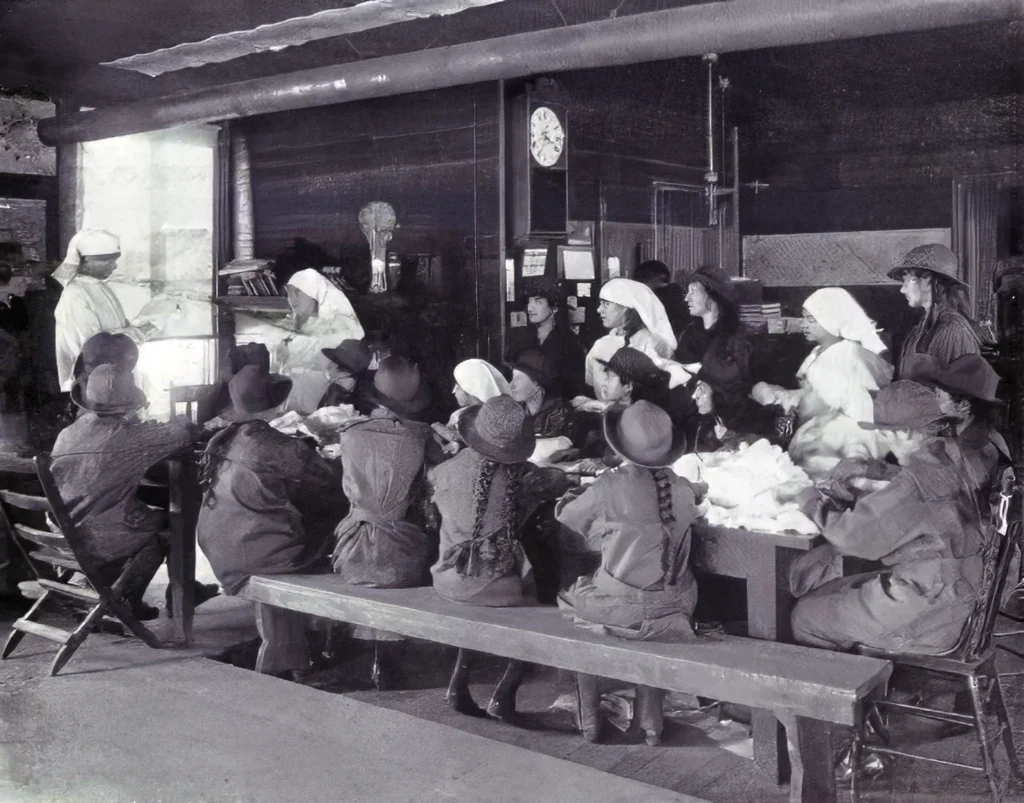
The Girl Scouts of Forest Hills Gardens supporting relief initiatives
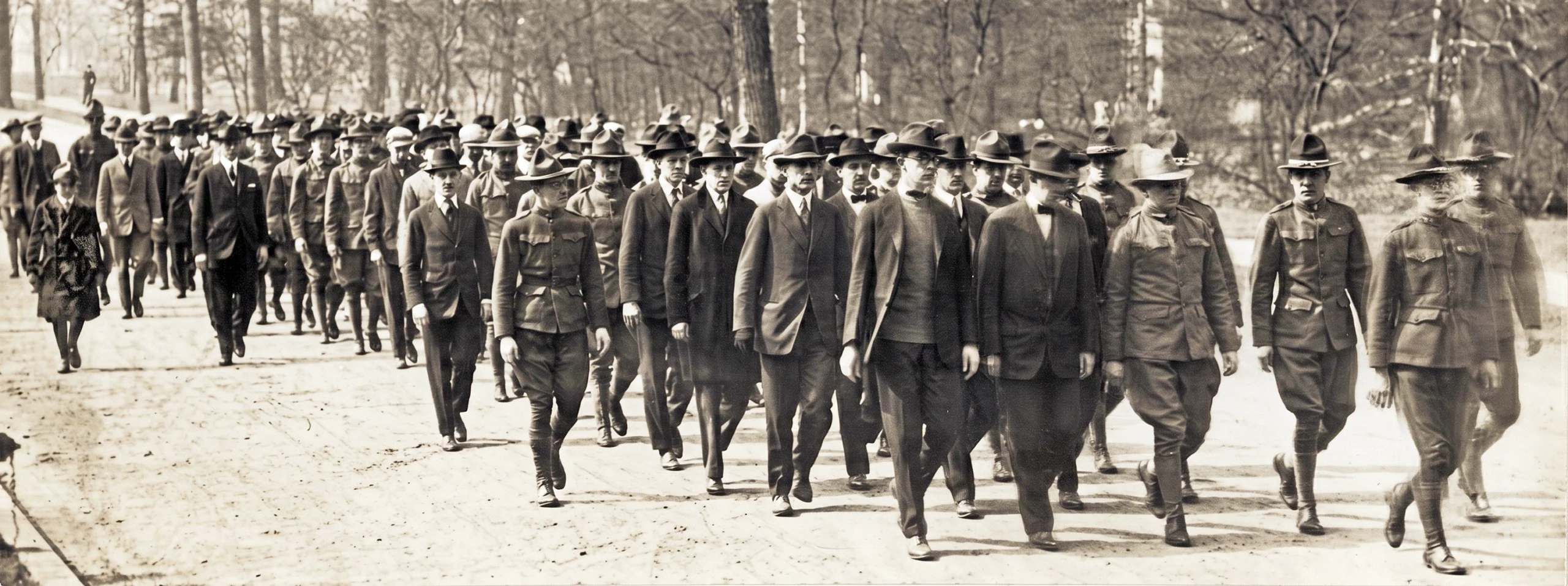
The Forest Hills Rifle Club grew quickly in early 1917, with strong enlistment and active recruitment efforts.
Recreational Life: Social, Cultural and the Arts
Cultural life remained vibrant in Forest Hills Gardens despite the growing wartime focus. The Gardens Players hosted a sold-out performance of 4 single act plays. They also hosted social evenings with visiting guest speakers such as Howard Kyle, leading man in The Yellow Jacket, an innovative stage production, who spoke on the philosophy of drama and the value of amateur theater. These gatherings and priorities persist in Gardens life to this day, with many social organizations still centered on the arts.
Educational and Religious Institutions
Concerns regarding Public School 101 continued into 1917 and proposals for a new permanent school building were actively discussed with city officials.
At the same time, Church-in-the-Gardens and St. Lukes played an increasingly central role in community life, both holding services for the Lenten season and drawing people together. Their influence extended beyond religious observance, serving as important gathering places for wartime support.
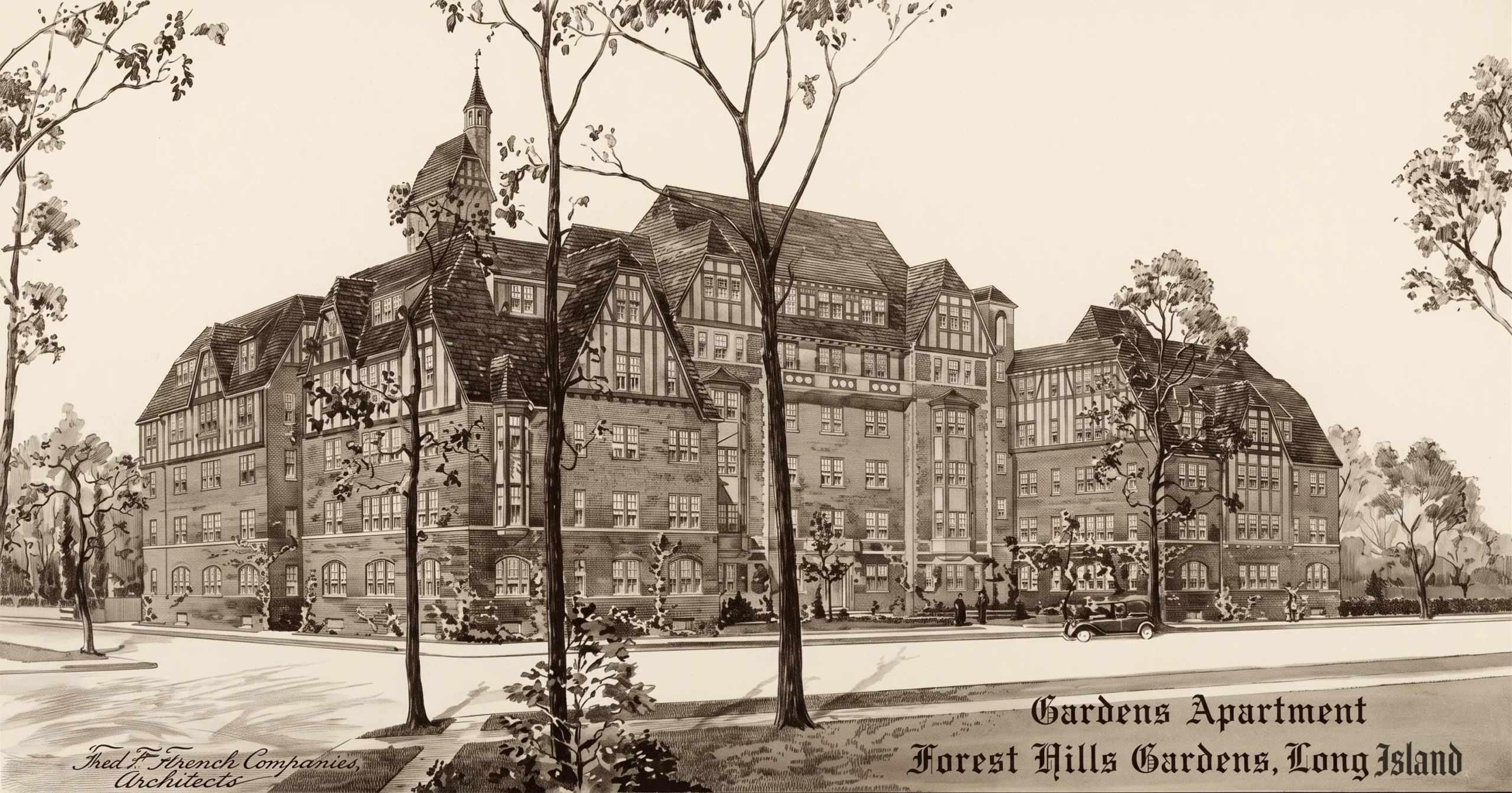
Rendering of the planned six-story elevator apartment house at the corner of Tennis Place and Dartmouth Street set to offer 64 modern apartments, including 12 studio units, with a focus on spacious family bedrooms and the latest kitchen and bath fixtures. Overlooking the West Side Tennis Club and Station Square, the building was designed to meet high standards of comfort and convenience, and saw strong early demand from prospective tenants.


