



Sept. 25, 1915 – Dec. 18, 1915 (Volume 1: Issue No.1 – No. 7)
The Birth of Community Spirit
The Bulletin was launched on September 25, 1915, by the Sage Foundation Homes Company with a very specific mission: to go beyond “brick and stone” and cultivate the “intangible thing called community spirit.” Managed by officers like Robert W. DeForest and John M. Demarest, the publication served as a “connecting link” between the visible growth of the neighborhood and the invisible social bonds of its residents.
A recurring theme throughout these issues is the Gardens’ status as a sociological experiment. Dr. Scott Bedford of the University of Chicago is quoted praising the Gardens as the most important effort at proper housing in America, citing the “harmony of architecture, winding streets, and tasteful street furniture.”
The Social Pillars: Men’s, Women’s, and Gardens Clubs
The social fabric of 1915 was woven through three primary organizations:
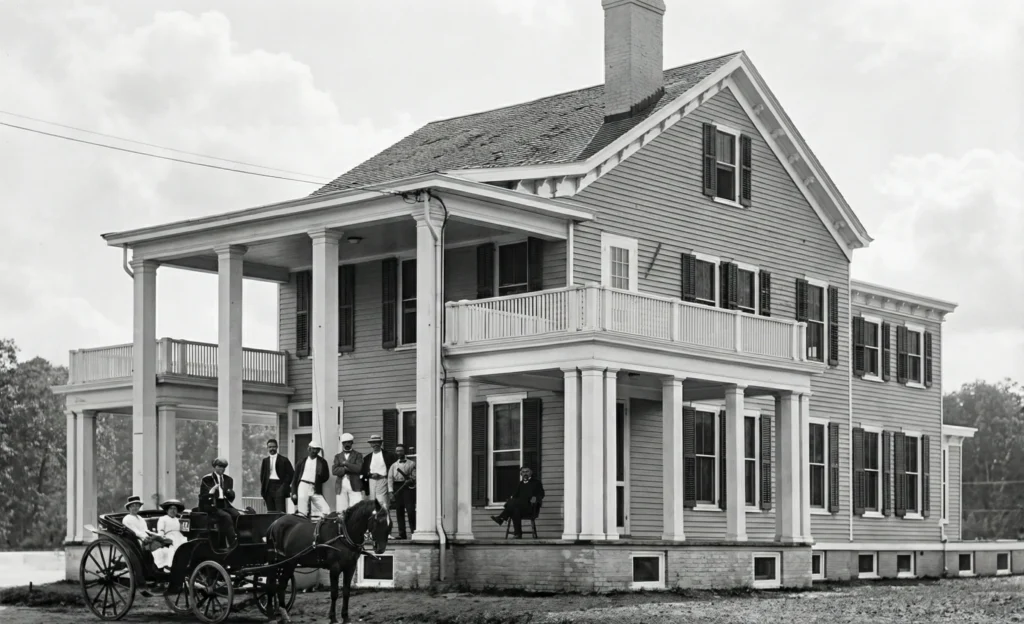
- The Gardens Club: Situated at the corner of Metropolitan and Ascan Avenues, the club was a joint effort between residents and the Homes Company. It involved moving and remodeling an old farmhouse from the Van Siclen tract to create a clubhouse. By October, it boasted over 100 families and offered tennis, bowling, billiards, and a ballroom.
- The Women’s Club: Formed originally from a Mothers’ Club in 1912, it quickly became a powerhouse for civic and charitable work. Under presidents like Mrs. Francis L. Holmes and Mrs. Albert Morton Gray, they campaigned for the first local kindergarten, organized “Red Cross” surgical dressing units, and hosted lectures on household economics and art.
- The Men’s Club: Led by Charles H. Scammell and later Edward H. Mays, the club was described as “not burdened with purpose” but essential for welcoming newcomers. They organized track meets, lectures on European history, and the local Fourth of July celebrations.
Religious Life and the Sage Legacy
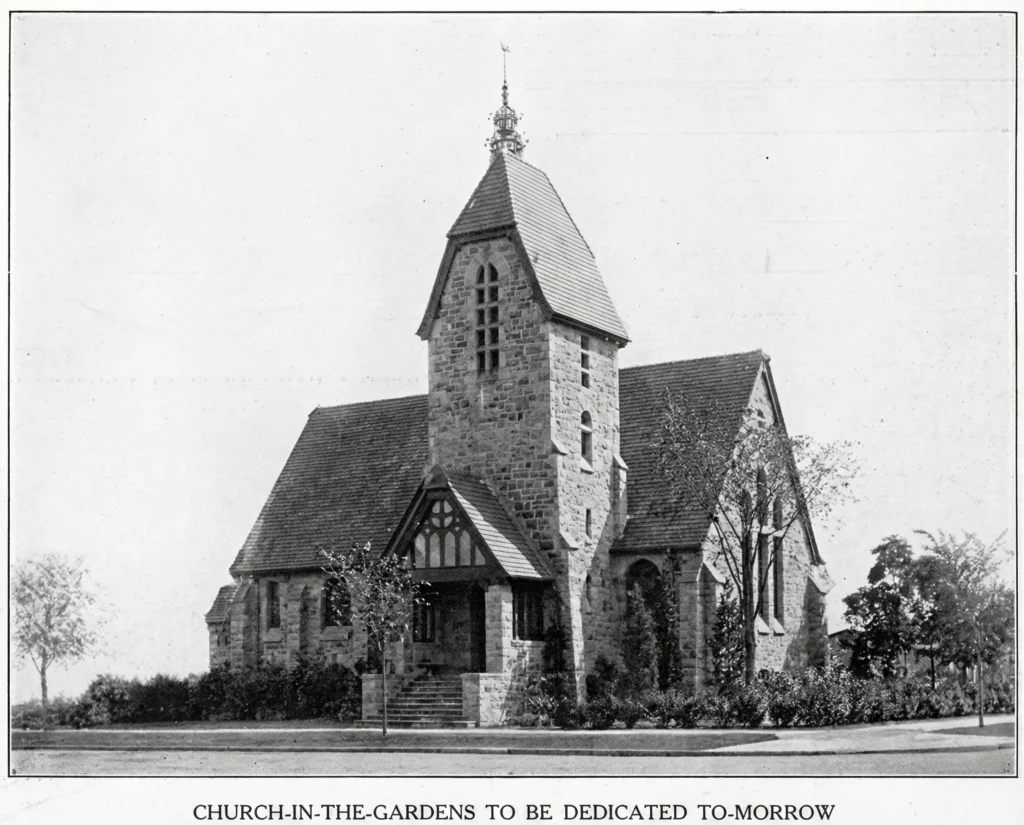
A major milestone occurred on October 10, 1915, with the dedication of the Church-in-the-Gardens. This was a gift from Mrs. Russell Sage, who stipulated that the edifice must always remain a “Union Church” open to all denominations. The Bulletin details the transition from a portable chapel and a store in Station Square to the beautiful stone structure we know today.
Simultaneously, other congregations were taking root. The Roman Catholic community purchased a site at Ascan Avenue and Queens Boulevard for $14,000, naming their new parish Our Lady Queen of Martyrs. Meanwhile, St. Luke’s Episcopal Chapel was operating out of 221 Greenway South, celebrating its second anniversary in October.
1915: A Year of Global and Local Transition
The Bulletin reflects the heavy weight of contemporary history:
- Woman Suffrage: The November 6 issue features a powerful editorial by Beatrice Forbes-Robertson Hale. As New York prepared for the 1915 suffrage vote, the local Suffrage Club was highly active. Hale noted that regardless of the outcome, women’s organizations would continue to focus on “the home, the school, and industrial protection.”
- The Great War: The “Volunteer War Relief Workers” met weekly to create surgical dressings for European hospitals. The Gardens even had a direct connection to the famous Henry Ford Peace Ship (the Oscar II); residents Ellis O. Jones, Florence Lattimore, and Elon Jessup sailed with Ford in an attempt to broker peace.
- Education: The neighborhood was already outgrowing its infrastructure. Enrollment at the “Gardens School” reached capacity (135 pupils) almost immediately, leading to early discussions about the “Gary Plan” (a progressive educational model) and the need for more portable classrooms to avoid part-time schedules.
A Sanctuary for Birds
Perhaps the most charming aspect of the 1915 Bulletin is the community’s obsession with its feathered residents. The Audubon Society, led by E.A. Quarles, was a dominant force. Residents were encouraged to “Vote for the Birds” by installing nesting boxes (made by the “Journeyman’s Class” for about $1.00) and planting berry-bearing shrubs. The vision was to make Forest Hills Gardens the pre-eminent bird sanctuary in the United States, utilizing its proximity to New York City to set a national example for conservation.
Sports and Leisure
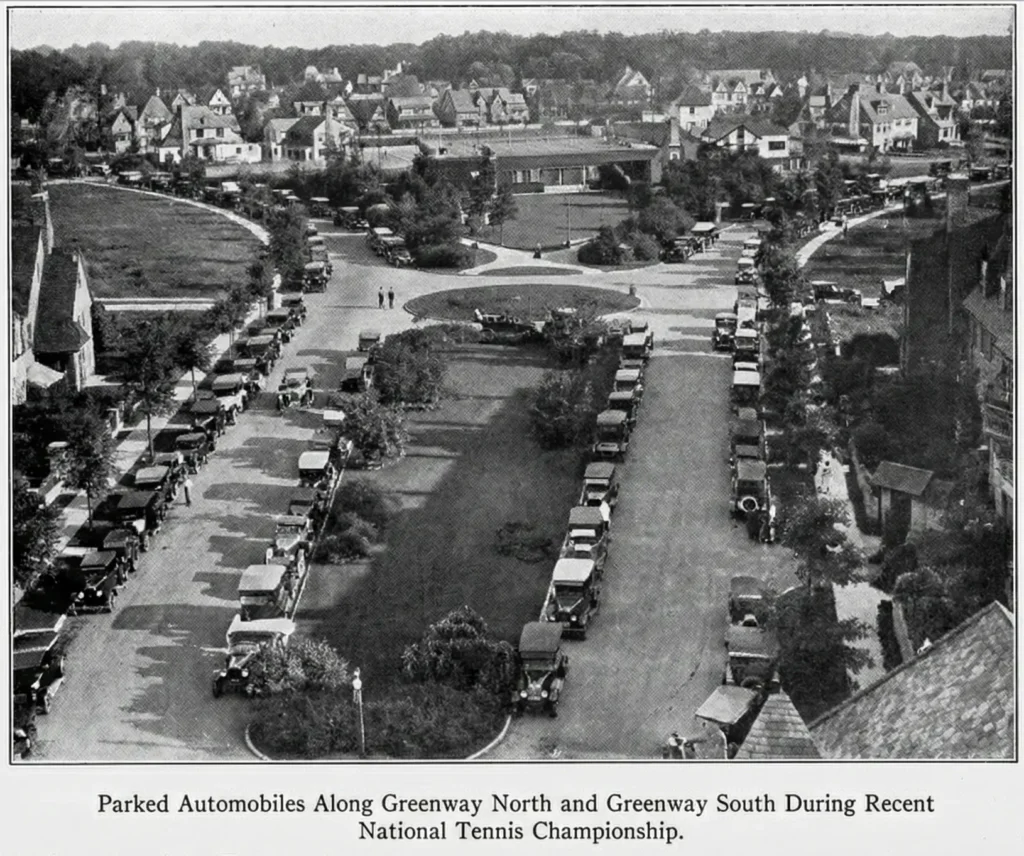
Life in 1915 was active. The West Side Tennis Club had recently moved to the neighborhood, bringing “many thousands of visitors” for the National Championships.
Local pride was also tied to the Forest Hills Gardens Baseball Team, which competed in an amateur league against teams from Englewood and Montclair.
One of the more humorous social events documented was the “Bachelors vs. Suffragettes” baseball game on Columbus Day, where the men played in women’s clothing. The ladies won 8 to 4, thanks in part to an umpire who “believed in safety first.”
The “Dog Watch” and Local Humor
Providing a lighter touch was the “Dog Watch” column, written by the “Watch Dog.” This column was a precursor to modern community forums, filled with witty observations, “strained relationships” (humorous disclaimers of being related to famous people), and the “Bake a Batch of Biscuits” campaign, which teased a local cook named Blanche for not making her famous biscuits often enough.
Holiday Traditions
As December arrived, the Bulletin called for the creation of new traditions. It suggested that every householder hang a holly wreath and place a lighted candle in the window for Christmas Eve to welcome the “carol singers” (waits) who would roam the streets with a costumed Santa Claus. There was also a strong focus on “White Gift” services, where children provided presents for the immigrant children being held in detention at Ellis Island.


