



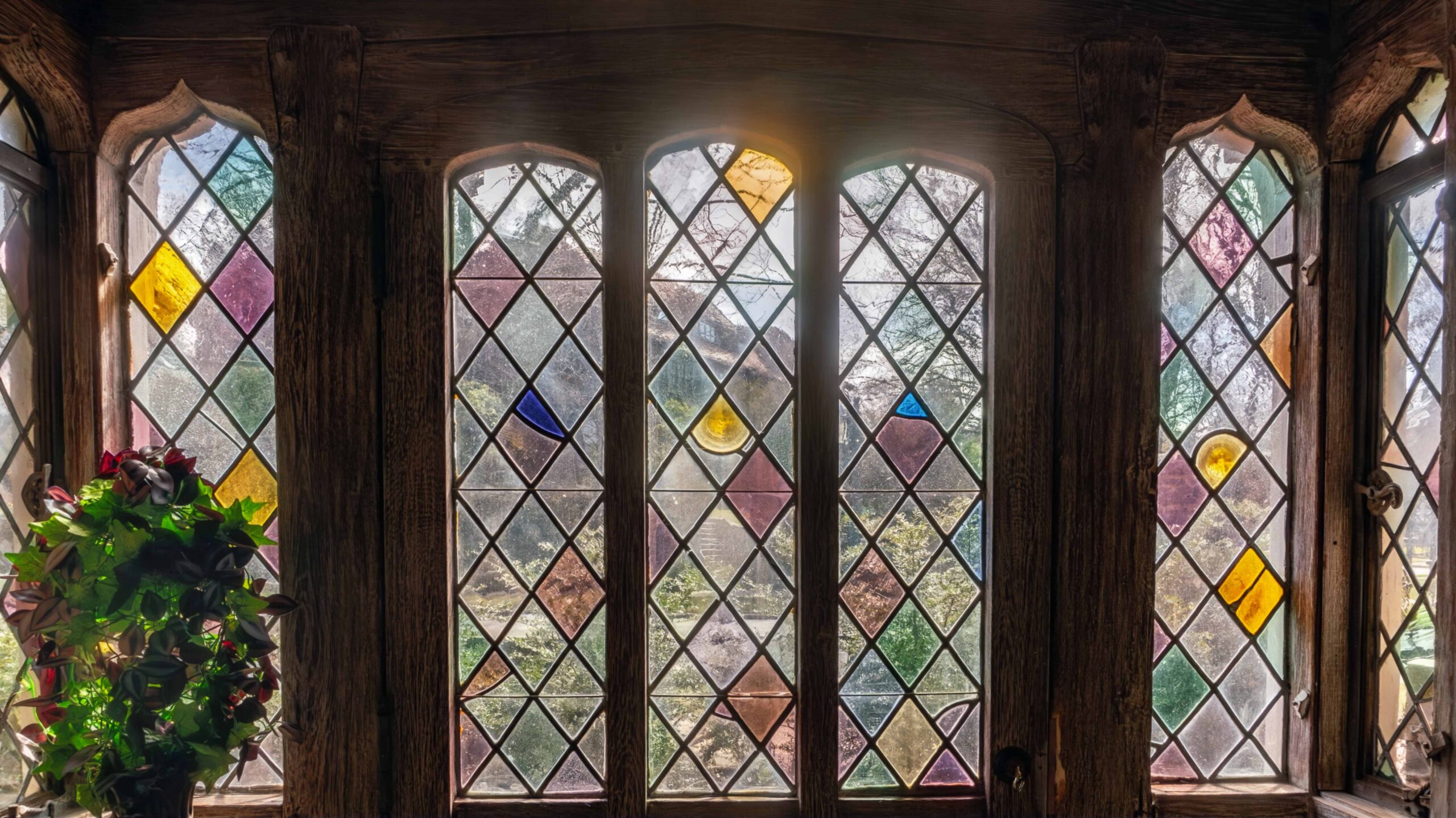
1) A big nostalgia wave (Tudor Revival boom)
Around 1890–1930, there was a huge fascination with medieval and early English architecture.
- Wealthy homeowners and architects wanted houses that felt old-world, handcrafted, and “European”
- Tudor-style homes became especially popular in the U.S. and U.K.
- Diamond leaded windows were a direct reference to medieval glassmaking, when large flat panes weren’t possible
- So using these windows instantly made a house feel historic and prestigious.
2) It mimicked pre-industrial craftsmanship
Before modern glass production:
- Glass could only be made in small pieces
- Those pieces were joined with lead cames
By the 1900s, you could make large panes—but people deliberately chose small diamond panes to:
- Evoke handmade craftsmanship
- Signal quality and tradition (even in newly built homes)
3) It solved real design problems
These windows weren’t just pretty—they were useful:
- Privacy: The pattern obscures views without needing curtains
- Light diffusion: Softens sunlight and reduces glare
- Irregular surfaces: Slight imperfections in glass added visual richness
- Especially popular for:
- Street-facing rooms
- Stairwells
- Sunrooms and bays
4) It paired perfectly with popular home styles
The early 20th century loved styles like:
- Tudor Revival
- Arts & Crafts
- Storybook / Cottage
All of these emphasized:
- Natural materials (brick, wood, stone)
- Handcrafted details
Diamond leaded glass fit right in—it added texture and visual detail without being flashy.
5) Advances made it affordable
Ironically, what started as a medieval limitation became a stylistic choice because:
- Industrial production made leaded glass cheaper and more accessible
- Builders could mass-produce these windows while still selling a “custom” look
6) It signaled status—but subtly
Unlike ornate stained glass (which could feel church-like or Victorian), diamond leaded windows were:
- Elegant but understated
- Associated with English country houses and manor homes
- It was a way to say “this house has taste and heritage” without being overly decorative.
Bottom line
This style became popular in the 1900s because it:
- Became affordable thanks to industrialization
- Referenced historic European craftsmanship
- Matched dominant architectural trends
- Offered privacy + beauty
We invite you to look at our current sampling. However, please know that this is an evolving project as we add to this repository of images. If you live in a home with stained glass, we would love to feature photos of your windows on our site as part of this series. Please contact us if you would be willing to contribute photos, and/or share your stories on maintaining these works of art.
Stained Glass Archive
Preserving the architectural legacy of Forest Hills Gardens
Accessing archival records…


